Start with the product requirement
List the brand label, size identification, fiber and care information, and any additional market-specific needs. Identify which details require professional compliance review. Do not assume a supplier’s standard label covers every destination.
Compare the relevant alternatives
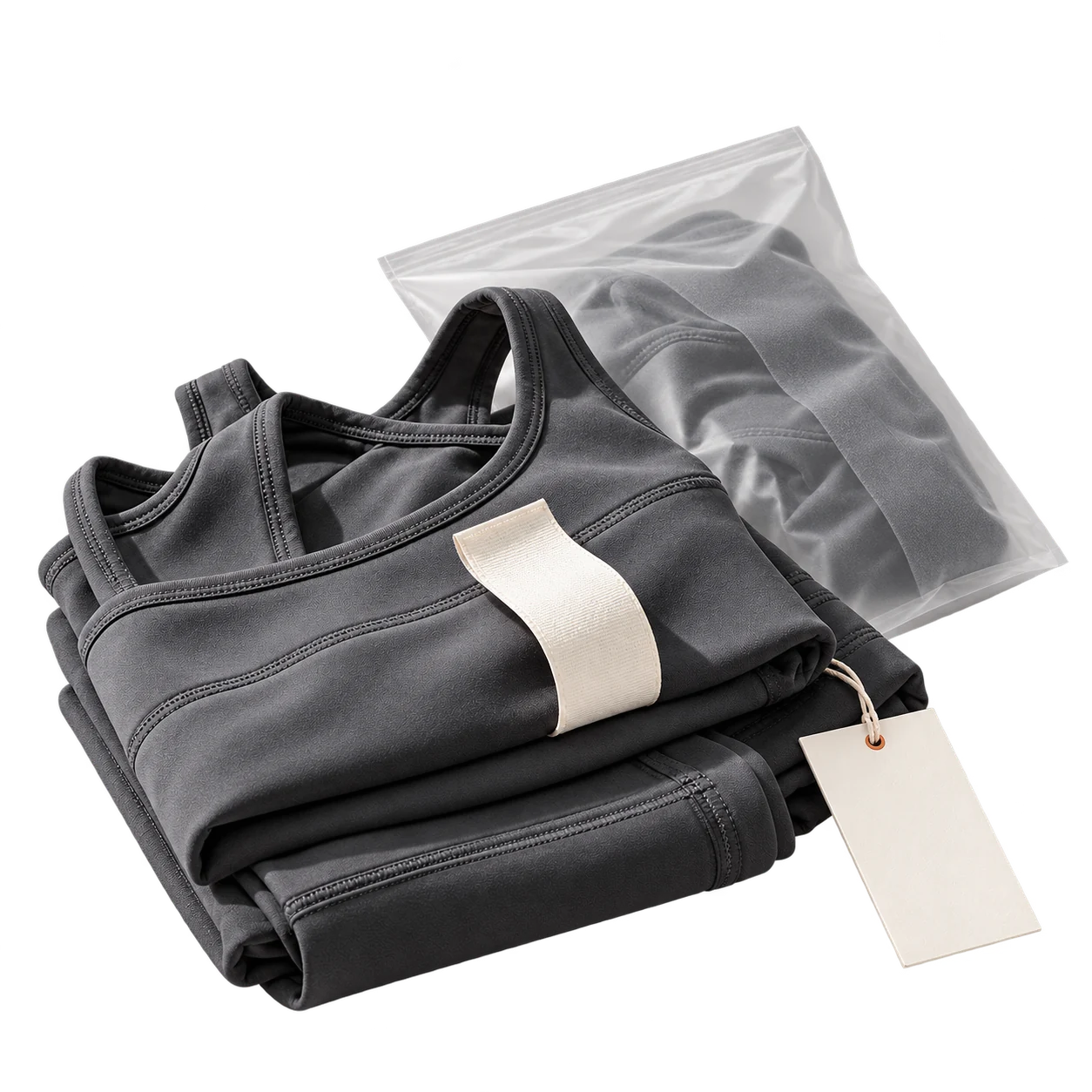
Compare label materials and attachment positions in the actual garment. Consider skin contact, stretch and visual appearance. A beautiful label can still be unsuitable if its edge or placement causes discomfort.
Write a clear specification
Prepare a label matrix showing artwork, wording, dimensions, material and location for each style. Check that size labels match the agreed size system. Keep translations under controlled review.
Review the physical result
Review physical label samples and a labeled garment. Check legibility, spelling, attachment and interaction with seams. Confirm any required care information against the approved material and construction rather than copying another product.
Record the decision
Approve the final label files before production. Retain the version used for each order and review changes when the destination, fabric composition, care instructions or brand identity changes.
Connect artwork to a physical reference
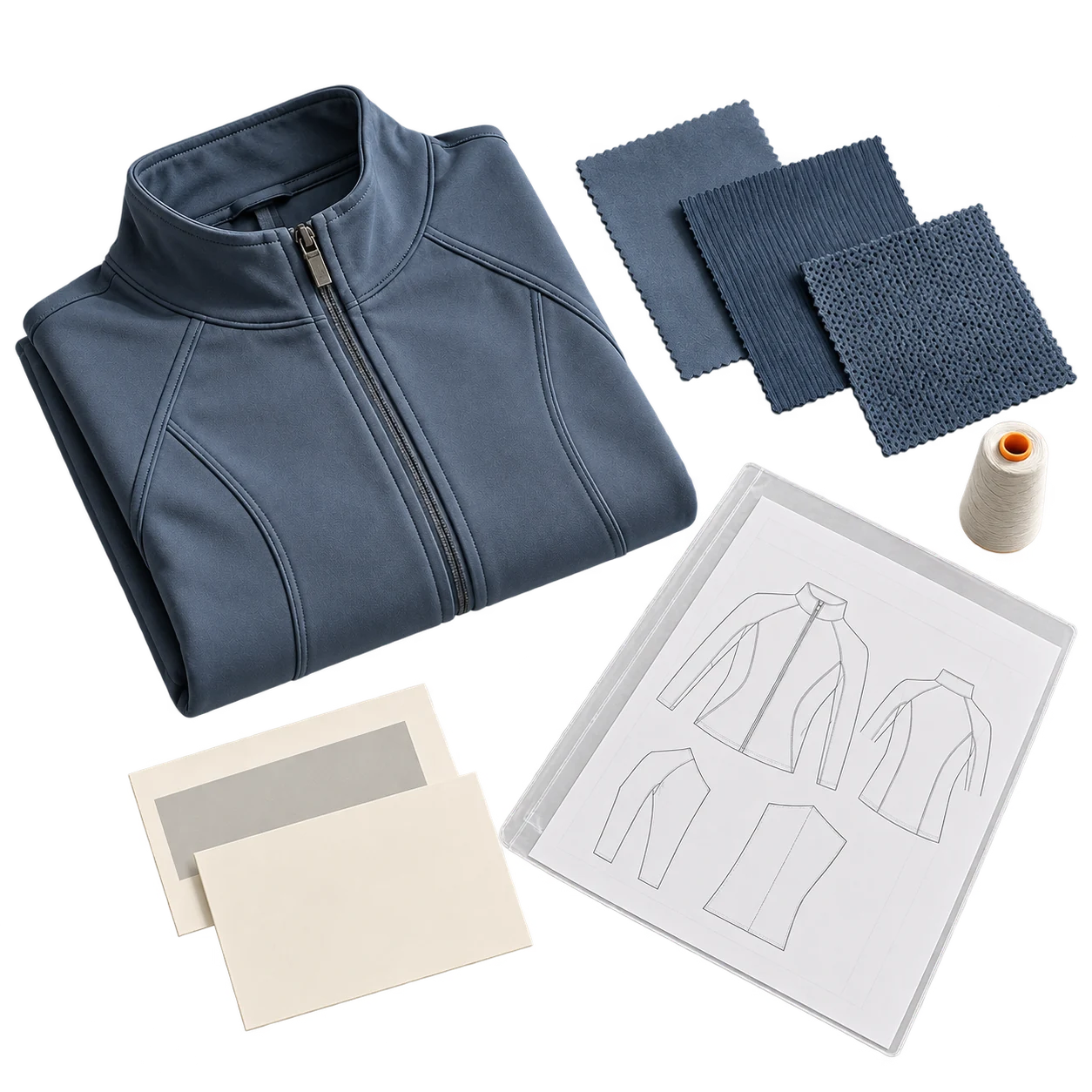
Keep the approved artwork revision, component specification and application or packing sample together. Identify the exact garment and material on which the detail was reviewed. A digital mockup communicates placement and intent, but it cannot establish every aspect of print color, texture, attachment or handling. Ask the supplier to flag changes that require another review. Where wording concerns product claims, labeling or destination-market obligations, obtain appropriate professional guidance rather than treating a generic template as a complete compliance solution.
TAKE THIS INTO YOUR NEXT DISCUSSION
Your buyer checklist
- List brand, size, fiber and care labels separately.
- Review destination-market wording with appropriate expertise.
- Fit labels to the actual garment for comfort and readability.
Turn the decision into your brief.
Choose the pieces you are considering and record your fabric, color, size and development priorities.
Build your project brief ↗Explore the style library ↗